

How temperature affects terpene preservation
Dabs are about more than THC. Terpenes provide the flavor, aroma, and specific effects of a strain. These aromatic compounds create the 'entourage effect' by interacting with cannabinoids to shift how the high feels. If you've ever noticed a sharp pine or heavy citrus note in your concentrate, you're tasting the terpene profile.
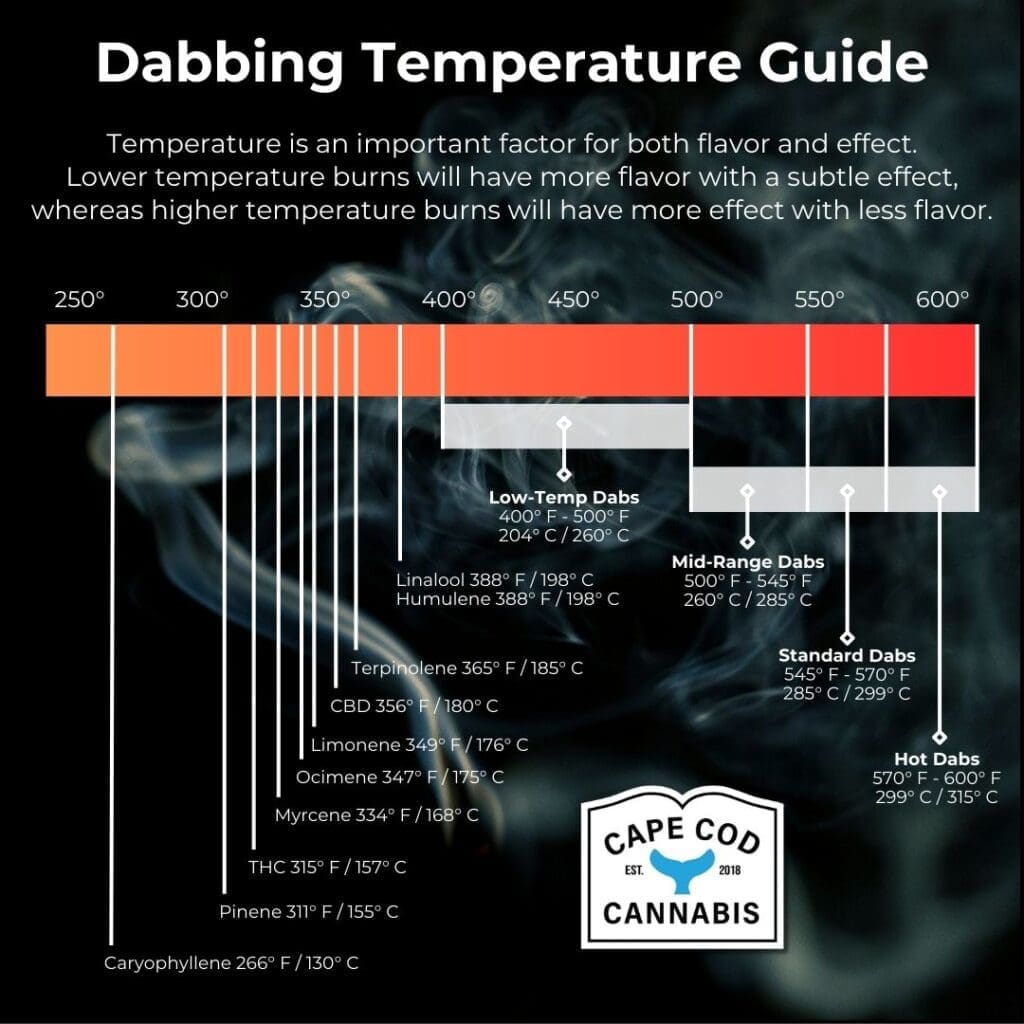
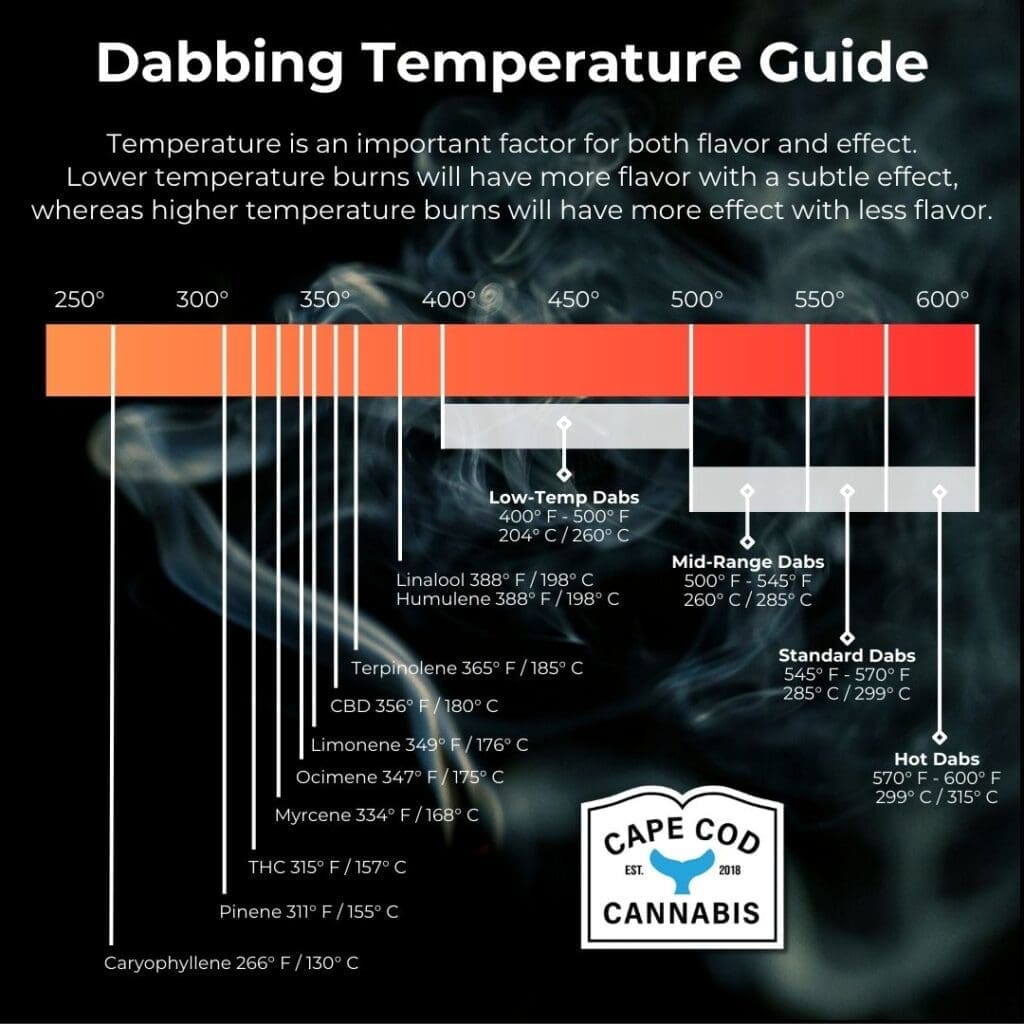
The problem is, terpenes are volatile. Heat breaks them down. Too much heat, and you're just getting a harsh hit of THC with little of the nuance you’re looking for. That’s why finding the right dabbing temperature isn’t just about getting a big cloud, it’s about preserving those delicate terpenes and getting the full expression of the concentrate. Different terpenes vaporize at different temperatures, and we’re talking a pretty wide range. Limonene, for example, boils at around 349°F (176°C), while myrcene starts to go at a much lower 332°F (167°C).
Ignoring this is like brewing a delicate tea and then boiling it. You’ll get something, but it won’t be what it was meant to be. It's about respecting the plant and getting the most out of what it offers. We’re finally getting a better grasp on exactly how to do that, and it’s a big shift from the “hotter is better” mentality of the past.
Data from Errly Bird shows that precise temperature control changes both flavor and potency. Vaporization is a chemical process where a few degrees determine which compounds survive.
The shift away from high-heat dabbing
For a long time, the advice around dabbing temperatures was pretty vague. “Low and slow” was the mantra, but what is low? Often, it meant somewhere between 450-600°F, which, honestly, is just burning a lot of those precious terpenes. The focus was on maximizing vapor production, which makes sense if you’re just chasing a huge hit, but it meant sacrificing flavor and a lot of the more subtle effects.
Recent research, like the work highlighted on errlybird.com, has given us a much more refined understanding of terpene degradation. We now know that many terpenes start to break down well below those older recommended temperatures. The old advice wasn't wrong exactly, it was just incomplete. It prioritized immediate gratification over the full experience.
The shift we’re seeing now is a move toward preservation. It's about appreciating the complexity of cannabis concentrates and tailoring your dabbing experience to highlight the specific terpenes present in your material. It's a bit more work, sure, but the reward – a more flavorful, nuanced, and effective dab – is absolutely worth it.
Optimal temperature ranges for concentrates
Okay, let’s get specific. Here’s a breakdown of optimal temperature ranges, what you can expect from each, and which terpenes will thrive. Remember, these are guidelines, and personal preference plays a role. But this will give you a solid starting point.
Low Temperature (250-350°F / 121-177°C): This is where terpene preservation is king. You’ll get a very flavorful vapor, but it might be thinner than at higher temps. Expect a more cerebral, uplifting experience, as terpenes like limonene and pinene are well-preserved in this range. This is ideal for concentrates with delicate floral or citrusy profiles. Shatter and sauce tend to shine here, letting their complex flavors really come through.
Medium Temperature (350-450°F / 177-232°C): This is a sweet spot for many. You get a good balance of flavor and vapor production. Terpenes like myrcene and beta-caryophyllene start to vaporize more readily, contributing to a more relaxing and sedating effect. This range works well with a wider variety of concentrates, including budder and wax. You’ll find a good balance between flavor and effect.
High Temperature (450-550°F / 232-288°C): This is for those who prioritize vapor production and a strong, full-bodied effect. However, you’ll sacrifice some terpene preservation. This range is best for concentrates with more robust profiles, and it’s where you’ll start to get that classic “dab” feel. Be careful not to go too high, as you’ll start to combust the concentrate and get a harsh, unpleasant taste.
It's important to note that different consistencies behave slightly differently. Sauces, being more liquid, often vaporize more efficiently at lower temperatures than shatter, which needs a bit more heat to fully release its compounds. Don’t be afraid to experiment and find what works best for you and your specific concentrate.
- Limonene (349°F / 176°C): Citrus notes and uplifting effects.
- Pinene (311°F / 155°C): Piney, alertness
- Myrcene (332°F / 167°C): Earthy, relaxing
- Beta-Caryophyllene (266°F / 129°C): Peppery, anti-inflammatory
E-Nail Settings: Dialing It In
E-nails are a game-changer for temperature control. Forget the guesswork of torching a nail – with an e-nail, you can set a precise temperature and maintain it consistently. This is essential for terpene preservation. But even with an e-nail, it’s not always perfect.
Many e-nails have temperature stability issues. Overshoot (the temperature exceeding your set point) and undershoot (the temperature falling below your set point) are common. Look for e-nails with PID controllers, which are designed to minimize these fluctuations. Popular brands like Dark Horse and Enail.com offer models with this feature.
Here’s a general starting point for e-nail settings based on the temperature ranges we discussed: Low Temp: 280-320°F (138-160°C), Medium Temp: 380-420°F (193-216°C), High Temp: 470-520°F (243-271°C). However, these are just starting points. You'll need to fine-tune them based on your specific e-nail model and the type of concentrate you’re using.
I’ve found that letting the nail heat up for a full minute after reaching the set temperature helps ensure stability. Also, regularly calibrating your e-nail with a separate thermometer is a good practice. Precise temperature control is the key to unlocking the full potential of your concentrates.
- Dark Horse: Known for robust construction and accurate temperature control.
- Enail.com: Offers a wide range of e-nails at various price points.
- Puff Daddy: Popular choice for its ease of use and affordability.
E-Nail Comparison: Key Features for Terpene Preservation (2026)
| Brand | Temperature Range | Heating Time | Temperature Stability | Price |
|---|---|---|---|---|
| Pulsar | Good | Average | Average | Affordable |
| Dabber | Good | Fast | Good | Mid-Range |
| Enail Pro | Excellent | Average | Excellent | Premium |
| Lookah | Average | Fast | Average | Affordable |
| Yocan | Average | Average | Poor | Budget |
| Puffit | Good | Average | Good | Mid-Range |
Illustrative comparison based on the article research brief. Verify current pricing, limits, and product details in the official docs before relying on it.
Banger Materials & Heat Retention
The material of your banger significantly impacts heat retention and, therefore, terpene preservation. Quartz is currently the most popular choice, and for good reason. It heats up relatively quickly and retains heat well, offering a clean and flavorful vapor. It's also fairly easy to clean.
Titanium bangers heat up very quickly, but they also cool down faster than quartz. This can lead to inconsistent vaporization. They’re also more prone to retaining flavors from previous dabs, which can affect the taste of your subsequent hits. Ceramic bangers offer a milder flavor and are easy to clean, but they don’t retain heat as well as quartz or titanium.
Personally, I prefer quartz dishes. The wider surface area allows for more even heating and better vaporization, and they’re easier to clean than buckets. But a good quartz bucket can also deliver excellent results. Ultimately, the best material is the one that you find works best for your preferences and dabbing style.
Low-Temp Dabbing: A Step-by-Step Guide
Ready to put this into practice? Here's a step-by-step guide to low-temperature dabbing. First, heat your banger to between 250-350°F (121-177°C) using your e-nail or torch. Let it cool for a brief moment – you want it warm, not scorching hot.
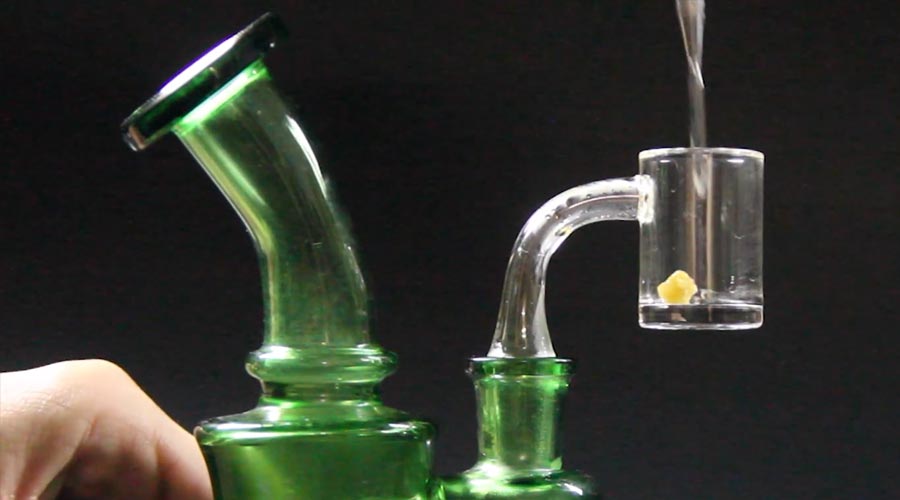
Next, add a dab the size of half a grain of rice. Seriously, start small. You can always take more, but you can’t untake it. Gently swirl the concentrate around the banger to ensure even heating. Immediately cap the banger with a carb cap to regulate airflow and trap the vapor.
Inhale slowly and steadily. You shouldn’t be getting a harsh hit. If you are, your banger is too hot. Watch for the vapor – it should be thick and flavorful. If you’re not seeing much vapor, try lowering the temperature slightly on your next dab. For a more in-depth look at the basics, Dr. Dabber’s 'How to Smoke Dabs' guide is a great resource.
Remember, low-temp dabbing is about finesse. It’s not about chasing huge clouds; it’s about savoring the flavor and maximizing the effects of your concentrate.
Troubleshooting: Common Dabbing Mistakes
Even with the right equipment and knowledge, mistakes happen. One of the most common is overheating the banger. This will destroy terpenes and produce a harsh, unpleasant hit. Another is using too much concentrate. Less is more, especially at lower temperatures. Improper carb capping technique can also lead to wasted vapor and a less flavorful experience.
A dirty banger is another culprit. Residue buildup can affect the flavor and temperature of your dabs. Clean your banger after every few uses with isopropyl alcohol and cotton swabs. If you’re still struggling, check out the Cannabasics #100 video on YouTube. It offers a visual guide to dabbing techniques and troubleshooting common issues.
Finally, don’t be afraid to experiment. Dabbing is a personal journey. Find what works best for you and your preferences. And remember, the goal is to enjoy the experience – and to preserve those precious terpenes!

No comments yet. Be the first to share your thoughts!